
Shopping Cart
- GreenFeel
- Materials
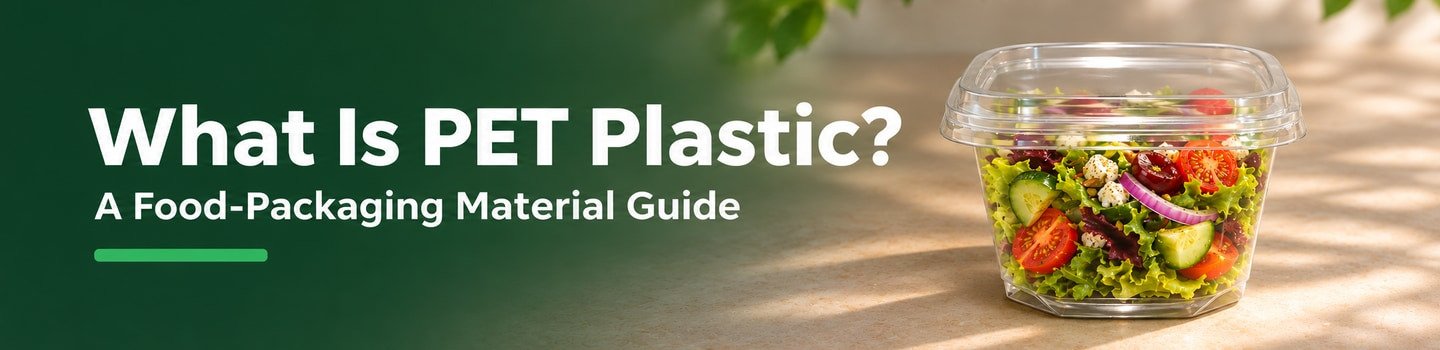
PET stands for polyethylene terephthalate, a thermoplastic polyester used in food containers, trays, pots and lids. Its combination of clarity, strength and low weight makes it useful for displaying and protecting food, particularly salads, fruit, desserts and chilled deli portions.
PET is a material family rather than one fixed packaging specification. Clear deli pots and specialist ready-meal trays can both be made from PET, with different structures and applications.
What Kind of Plastic Is PET?
PET belongs to the polyester family of plastics. It is a polymer: a material made of long molecular chains. The word thermoplastic describes how it can be softened with heat and shaped during manufacturing, then set into a solid form as it cools.
Manufacturers can turn PET into sheet and form it into lightweight packaging. The material formulation, processing and pack design determine the resulting clarity, stiffness and heat performance. This helps explain why the same plastic family appears in several quite different food-packaging formats.
Why Is PET Used in Food Packaging?
Three properties help explain its role:
- Clear presentation. Transparent PET lets customers see the contents without opening the pack. This is useful for colourful salads, layered desserts and fruit portions on a display counter, as illustrated by our clear 16oz square deli container with a PET lid.
- Strength with low weight. PET can form rigid packs that hold their shape while remaining light to handle. The wall thickness, shape and closure also contribute to the finished container’s performance.
- A barrier to oxygen and moisture. PET helps limit their passage through the material. In a suitably designed pack, this contributes to food protection; the food, seal and storage conditions still determine the actual shelf life.
Where Will You Find PET?
In foodservice and retail, common formats include deli containers and pots, salad containers, fruit and dessert packs, chilled-food trays and clear lids. PET is also used in drinks bottles and packaging films. Its appearance is familiar, but a transparent container can be made from another plastic, and PET can also be coloured.
The format provides a different function in each case: a pot holds a portion, a tray presents or supports food, and a lid covers a compatible container while retaining visibility.
What Are APET, CPET and rPET?
APET and CPET describe forms of PET; rPET describes recycled material input.
| Term | Meaning and Common Packaging Role |
|---|---|
| APET | Amorphous PET, commonly used for clear food-display packaging, particularly chilled or room-temperature applications. |
| CPET | Crystallised PET, used in specialist heat-resistant formats such as ready-meal trays designed for specified oven or microwave use. |
| rPET | PET made using recovered and reprocessed material. The recycled-content percentage depends on the product. |
Crystallisation during CPET manufacture increases stiffness and heat resistance. That is why specialist CPET trays can serve a different role from clear APET display packs.
The descriptions can overlap: a CPET tray can contain recycled PET. Our guide to rPET packaging and recycled content explains that distinction in more detail.
How Does PET’s Form Affect Its Use?
Ordinary clear display packs serve a different purpose from specialist heat-use trays. For heating or frozen storage, follow the exact product’s instructions, including any separate lid or film conditions. The letters PET alone do not establish those uses.
For food contact, use packaging documented for the intended food, contact time and temperature. The supplier’s relevant declaration of compliance and use instructions should cover that application and market. Repeated washing and reuse also need an appropriate product specification.
What Does Code 1 Mean for Recycling?
The resin identification number 1, often accompanied by PET or PETE, identifies this plastic family. It does not indicate the recycled-content percentage.
PET can be reprocessed through suitable recycling systems. Collection acceptance depends on the actual format and route: businesses should follow their waste collector’s instructions, while takeaway customers should follow their local authority’s guidance. Empty the pack and follow the relevant food-residue and component-separation instructions. Recycled content, recyclability and compostability are different claims; PET’s material name establishes none of those on its own.