
Shopping Cart
- GreenFeel
- Materials
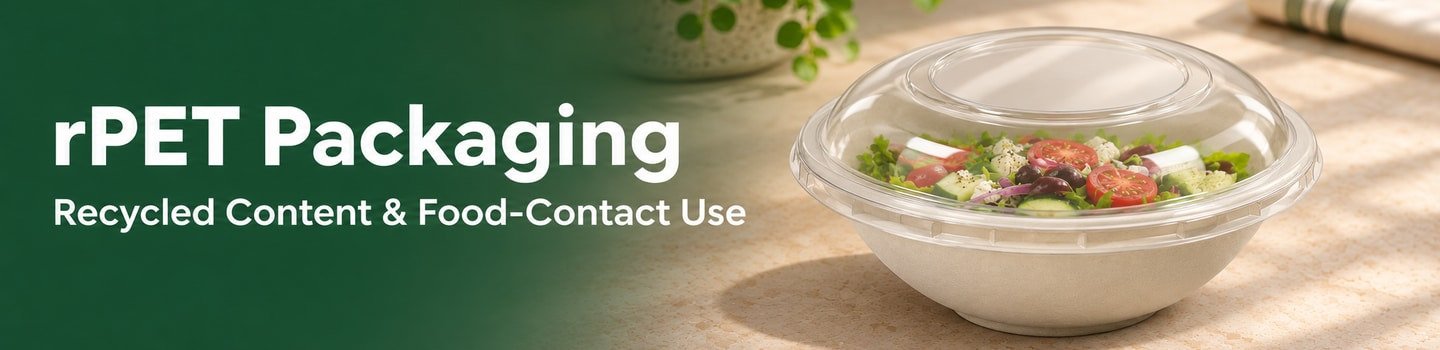
rPET is recycled polyethylene terephthalate: PET plastic made using recovered and reprocessed material. In food packaging, it can become clear trays, containers and lids. The “r” describes where the material came from; PET still describes the plastic.
Its purpose is to put recovered PET back into use and replace some new, or virgin, PET input. Understanding rPET means separating three questions: where the material came from, how much recycled material the product contains, and what can happen to it after use.
Where Does Recycled PET Come From?
Used drinks bottles are one source, but they are not the only one. Tray-to-tray recycling also turns used PET food pots, tubs and trays into material for new food packaging.
Post-consumer recycled, or PCR, describes material recovered after use by end users, including businesses. Pre-consumer describes recovered manufacturing waste. These terms describe the input's history.
How Is rPET Made Into New Packaging?
A common route is mechanical recycling. The PET is physically recovered and reprocessed, with controlled preparation and cleaning stages:
- Collection and sorting: PET packaging is separated from other waste and unsuitable materials, then shredded into small pieces. Separating PET from other plastics helps keep the input stream consistent.
- Cleaning and decontamination: specialised washing and appropriate food-contact decontamination processes reduce contaminants from the material's earlier use.
- New material and manufacture: reprocessed PET can be supplied as flakes or pellets and made into new packaging, including sheet formed into trays and pots.
This is more than rinsing an old container and using it again. Recycling creates material for a newly manufactured item; reuse keeps the existing item in service. Manufacturers may blend recycled and virgin PET to meet a particular packaging specification.
Why Is rPET Used for Food Packaging?
Recycled PET can retain the clear appearance and structural properties that make PET useful for food display. Clear formats allow the customer to see salads, fruit, deli portions and layered desserts while the pack holds its shape for handling and presentation.
The recycled input does not create one new set of temperature properties. Ordinary clear rPET display packs and specialist CPET ready-meal trays can both contain recycled PET, yet serve different applications. Hot filling, reheating and freezing depend on the finished format, rather than the “r”.
Using recovered PET gives an existing material another use. A broader environmental comparison also depends on packaging weight, processing, transport and what happens after use, so a recycled percentage is one part of the picture rather than a complete environmental score.
Does rPET Mean 100% Recycled?
No. A product described as rPET may contain a mixture of recycled and virgin PET. A stated percentage gives more information, provided its basis is clear: which item it describes, whether it is a minimum or exact figure, and how it is measured.
A worked example: a 20g PET base containing 50% recycled PET contains 10g of recycled material. Add a 5g virgin-PET lid and the combined 25g pack contains 40% recycled PET by weight. These are hypothetical figures, not GreenFeel product specifications.
The same distinction applies to mixed-material packs. Our 950cc bagasse bowl with an rPET lid has a stated guaranteed minimum of 50% recycled content for the lid. That percentage describes neither the fibre body nor the complete set.
Colour, transparency and plastic identification code 1 cannot reveal a recycled-content percentage. The product's documented composition provides that information.
How Can Recycled PET Be Suitable for Food Contact?
Food-contact recycling controls address a particular problem: used plastic can carry substances from previous use or waste collection. Controlling the input material and the decontamination process helps prevent those substances transferring into food at unsafe levels.
The finished packaging must also meet the applicable food-contact requirements for its intended use. A certificate confirming recycled content answers a different question from evidence of food-contact compliance. For a food business, the relevant supplier declaration and specification should identify the actual item and its food, contact-time and temperature conditions.
Great Britain and Northern Ireland have different regulatory routes for recycled plastics. The documentation needs to cover the market where the packaging will be supplied or used.
Is rPET the Same as Recyclable PET?
Recycled content looks backwards; it describes material used to make the item. Recyclability looks forwards; it concerns whether the item can enter an appropriate recycling route after use. A pack can contain recycled PET without every local service accepting it.
For example, tray-to-tray recycling needs a chain that collects the used tray, separates suitable PET and sends it to a reprocessor. A recyclable material cannot complete that journey if the item is put into the wrong waste stream or the collection service does not accept it.
Follow your business waste collector's instructions for packaging from your premises and local council guidance for packaging used at home. Separate components as directed and follow food-residue instructions. rPET remains plastic: it is not made biodegradable or compostable by its recycled origin.