
Shopping Cart
- GreenFeel
- Materials
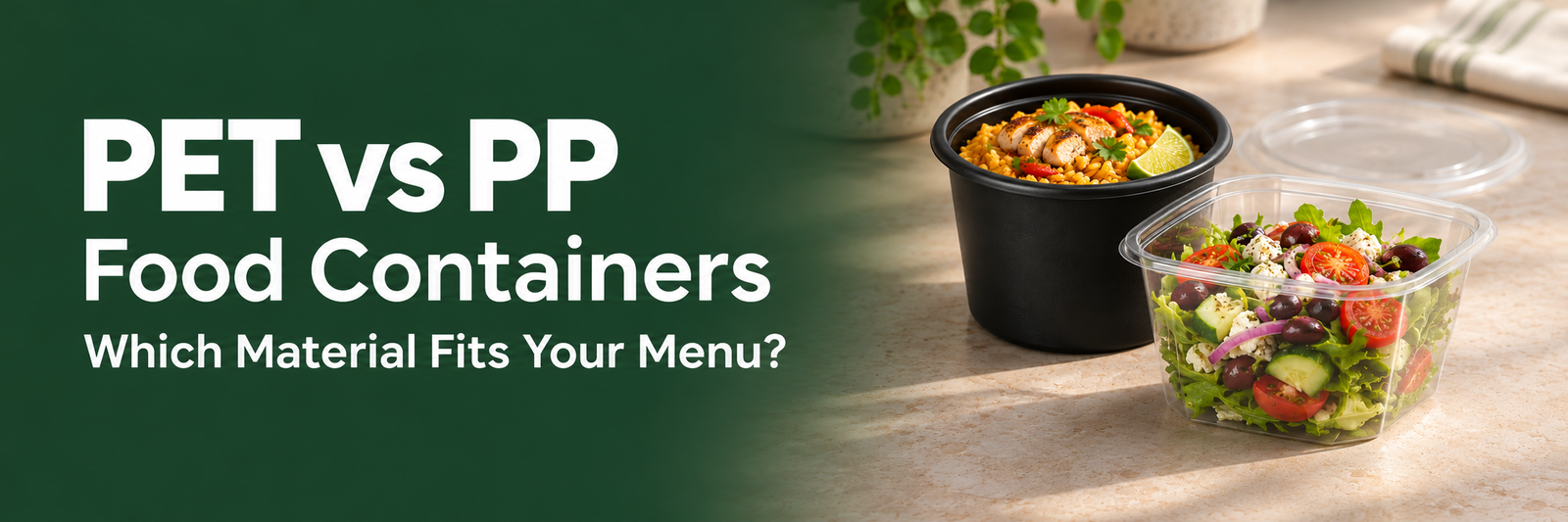
Clear PET is commonly chosen for chilled-food display, while PP is widely used for hot-food and microwaveable meal containers. PET brings clarity and rigidity; PP offers versatile grades that suit durable tubs and reheatable packs. The useful comparison is how those properties serve the food, rather than which plastic is universally better.
What Are PET and PP?
PET is polyethylene terephthalate, a polyester. PP is polypropylene, a polyolefin. Both are thermoplastics: manufacturers shape them using heat, but they produce different packaging characteristics.
Neither name describes one fixed container. Thickness, shape, formulation and manufacturing method affect the finished pack. A deep bowl and a shallow tray made from the same plastic can feel and perform differently.
PET vs PP at a Glance
| Property or Application | Typical Clear PET Food Packaging | PP Food Packaging |
|---|---|---|
| Visibility | High clarity suits food displayed through the pack. | Clear, translucent and coloured versions are available. |
| Structure and Handling | Can form stiff, clear pots and trays. | Grades balance stiffness and impact resistance for different pack designs. |
| Hot Food and Reheating | Ordinary clear display packs are usually chosen for cold food; specialist PET formats differ. | Widely used in hot-food and microwaveable ranges. |
| Common Foodservice Uses | Salads, fruit, deli portions and desserts. | Hot takeaway meals, food-storage tubs and reheatable portions. |
| Oxygen Barrier | Generally provides a better oxygen barrier than unmodified PP. | Barrier layers or other design features can be added for particular applications. |
These are material and application tendencies. A finished pack's specification sets its actual heating, freezing and repeated-use conditions.
Why Is PET Common in Chilled-Food Display?
Clear PET lets customers see the ingredients, layers and portion before opening the pack. That is useful for a salad counter, fruit display or takeaway dessert, where the food itself helps explain what is being sold. Its ability to form a rigid shape also suits stacked pots and display trays.
Our 16oz square deli container with a PET lid illustrates this clear format. The material helps visibility, while the depth and opening determine how a layered dessert or a bulky salad sits inside it. Capacity alone does not describe that presentation.
PET also offers a useful oxygen barrier. This means resistance to oxygen passing through the plastic, which matters for oxygen-sensitive food in sealed retail packaging. It is different from a lid's resistance to leaks: the closure, film and other pack components also affect protection. A material name alone cannot establish a shelf life.
Why Is PP Common for Hot Meals and Reheating?
PP can be made in grades and designs suited to hot filling and microwave reheating. Heat resistance matters because the container must retain its shape while food is filled, carried or reheated. These formats are common for pasta, rice, curry and prepared meals.
PP also gives manufacturers choices in stiffness, impact resistance and appearance. Some grades emphasise rigidity; others balance toughness or clarity. This is why PP can appear as a clear storage tub, a translucent tray or a black takeaway bowl. Clear packaging is not automatically PET, and black packaging is not automatically PP.
One practical distinction concerns the complete pack. Our 500ml black round container set combines a microwaveable PP base with a PET lid. Its instructions say to remove the lid before microwaving the base. The components do different jobs and have different use limits.
What About Freezers, Ovens and Reuse?
Freezer storage, microwave reheating and conventional oven heating are separate applications. Products intended for freezing exist in both families, including specialist PET trays and selected PP formats. Microwave suitability does not establish freezer suitability.
PET is also made in specialist forms. Crystallised PET, or CPET, is used for ready-meal trays designed for freezer-to-oven service. That explains why “PET is always cold-only” is misleading, while an ordinary clear deli pot is not an oven tray.
For repeated washing and reheating, use a range specifically intended for reuse. The supplier's instructions should cover the relevant service, including food type, time and temperature. Food-contact compliance documentation supports that intended use; a resin code alone does not.
Is PET or PP Better for Recycling?
Both can enter recycling systems, but the actual route depends on the item, its colour, labels, other materials and the collection service. Resin identification codes 1 for PET and 5 for PP identify the plastic; they do not promise that a particular pack is accepted locally.
Recycled content is a separate comparison: it describes material already used to make the pack. A PET or PP label does not reveal that percentage. For waste from your premises, follow your commercial collector's acceptance and preparation instructions; household takeaway waste follows local council guidance.
How Does This Translate to Your Menu?
- Chilled food chosen on display: start with the visibility and shape of clear PET, then compare how the actual portion sits inside the pack.
- Hot meals or food sold for reheating: start with formats explicitly specified for that service, commonly PP. Make the reheating instructions clear to the customer.
- A mixed menu: use different combinations where needed. A salad and a reheatable curry do not have to share one packaging format.
When comparing plastic food containers, compare the cost of a complete serving, including the lid and any sauce pot. Fill a sample with your normal portion and trial the delivery journey: look at closure, stacking and presentation. Those observations help choose the format; the supplier's specification establishes its permitted use.