
Shopping Cart
- GreenFeel
- Materials
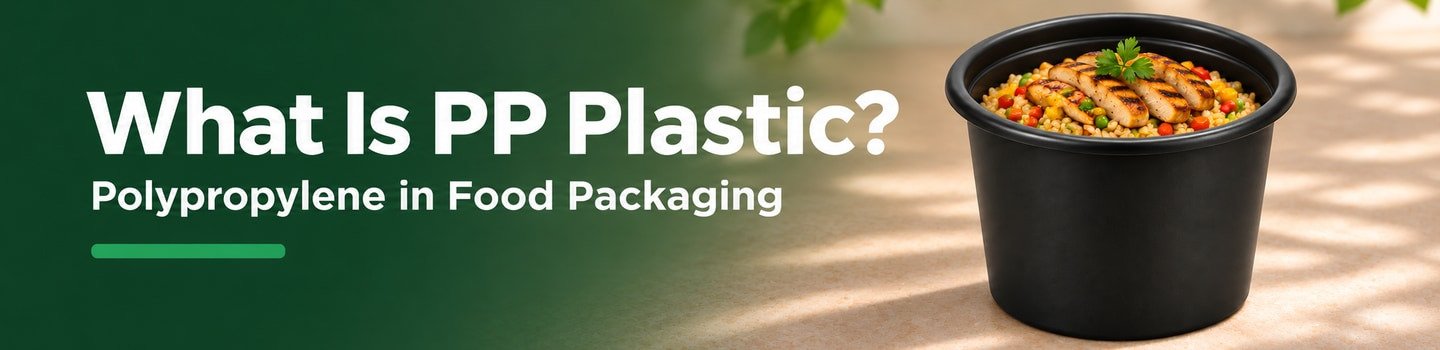
PP stands for polypropylene, a lightweight thermoplastic used in food tubs, takeaway containers, trays, lids and packaging films. Packaging makers value its combination of toughness, low weight and adaptable properties. Some PP formats are designed for hot food and microwave reheating; others serve chilled food or repeated-use applications.
Understanding PP helps explain what these packs have in common, as well as why two products made from the same plastic can look and perform differently.
What Kind of Plastic Is Polypropylene?
Polypropylene belongs to the polyolefin family of plastics. It is made by joining propylene molecules into long polymer chains. As a thermoplastic, it can be softened with heat and shaped during manufacturing, then cooled into a solid form.
PP can be injection moulded into a container or closure, formed from sheet into a tray, or produced as thin film. Those processes help turn one material family into everything from a small portion pot to a meal tray or food wrapper.
Why Is PP Used in Food Packaging?
Several useful properties explain its range of applications:
- Low weight. PP’s low density allows manufacturers to make light containers and closures. The amount of material in a finished item also depends on its size, shape and wall thickness.
- Toughness and stiffness. Different PP grades can balance a firm shape with resistance to knocks and bending. This is useful for packs handled during filling, delivery and serving.
- Moisture barrier. PP limits the passage of water vapour, making it useful in both rigid packs and films. The finished pack’s walls, layers and seals determine its overall barrier performance.
- Heat-use options. Suitable grades and pack designs support hot filling and microwave reheating. These are specified applications of finished products, rather than a permission attached to every PP item.
Manufacturers adjust these properties through the resin grade, additives and design. You may encounter the terms homopolymer and copolymer: these describe variations in the polymer’s composition that help achieve different combinations of stiffness, clarity and impact performance.
Which Food-Packaging Formats Use PP?
Rigid PP food containers include tubs, deli and portion pots, takeaway bowls and meal trays. Lids and closures are also made from PP. A deep tub suits a different portion shape from a shallow tray, while a closure needs a design that fits and holds securely on its intended container.
PP is also used in flexible food wrappers and films. BOPP means biaxially oriented polypropylene: film stretched in two directions during production. It is another form of PP packaging, rather than a new resin family.
Shape and construction matter alongside the material. A container’s ribs, wall thickness and rim contribute to how it handles a filled portion.
Why Is Some PP Clear and Some Coloured?
PP can be clear, translucent or coloured. Resin choice and clarifying additives can improve transparency, while colour can be added for a different appearance. Clear packaging is therefore not exclusive to PET: our 500ml clear food container, for example, is listed as polypropylene.
How Is PP Used for Hot and Cold Food?
PP is used in both chilled-food packaging and products designed for hot meals or reheating. A hot-fill container must tolerate filling and contact conditions, while a microwavable pack must suit its specified heating method. Conventional oven use is a separate application.
For heating, freezing or repeated washing, follow the particular pack’s instructions. Freezer suitability varies between PP products, and reusable ranges have their own cleaning and use specifications. A lid or sealing film can have different conditions from the container, even when supplied together.
Food-contact suitability concerns the finished article’s intended application. Use the supplier’s relevant declaration of compliance and instructions to confirm the food types, contact time, temperature and market covered.
What Does Plastic Code 5 Mean?
A 5 or 05, often accompanied by PP, is the resin identification code for polypropylene. It identifies the material, rather than its recycled-content percentage or heating instructions.
PP can be recycled through suitable systems, but a pot, lid and flexible film may have different collection routes. For waste from your premises, follow your commercial collector’s guidance; for takeaway packaging used at home, follow the local authority’s instructions. Empty the item and follow the relevant preparation and separation guidance.